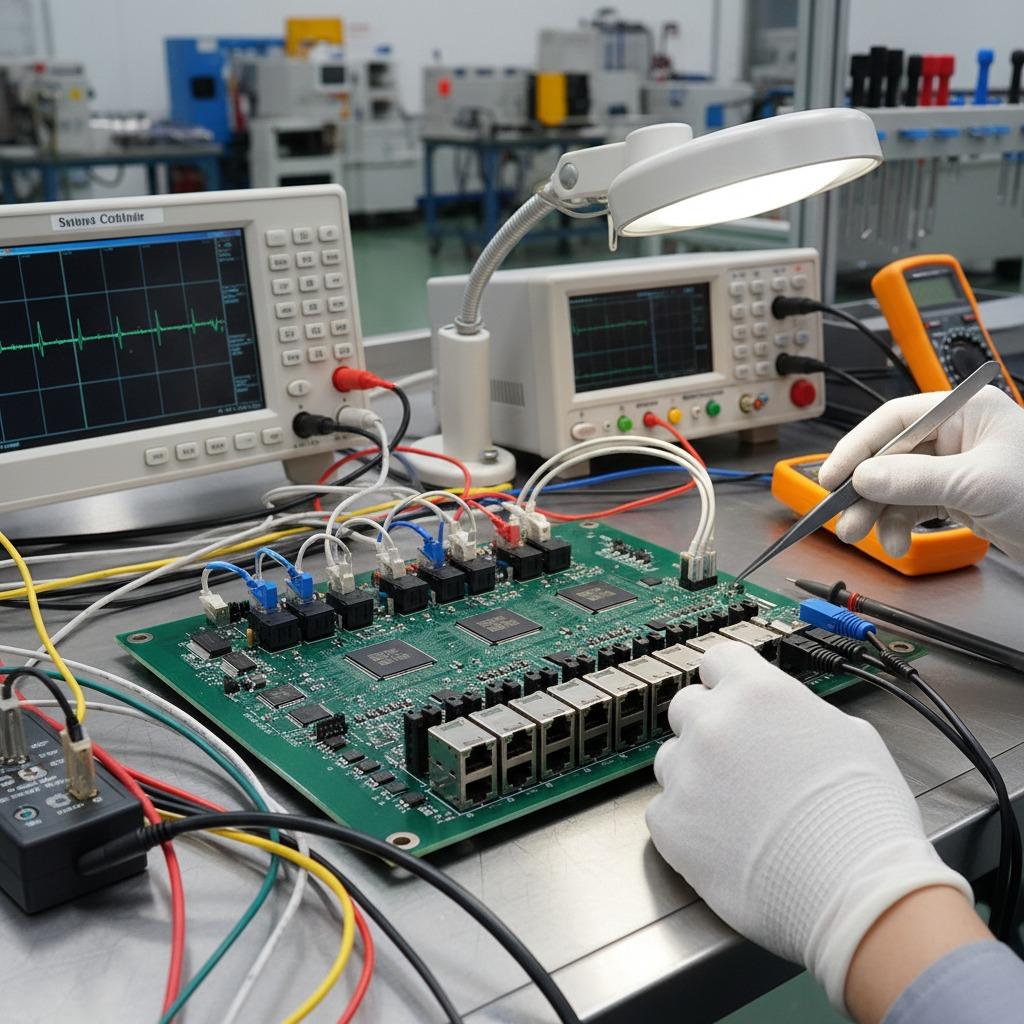
Choosing the right camera module for smart locks is important for brands developing smart door locks, video door locks, facial recognition locks, apartment access devices, and connected home security products. A smart lock camera module is not just a small lens. It must combine stable imaging, compact PCBA design, low power consumption, secure data transmission, night vision support, and reliable long-term performance.
For smart lock buyers, the camera module directly affects user experience. If the image is blurry, the night vision is weak, the module consumes too much power, or the connection between the camera board and main control board is unstable, the whole smart lock product may receive complaints.
HCDPCBA supports camera-related electronic projects through one-stop electronics manufacturing services, including PCB prototyping, SMT assembly, PCBA manufacturing, component sourcing, DFMA review, testing, and OEM/ODM production.
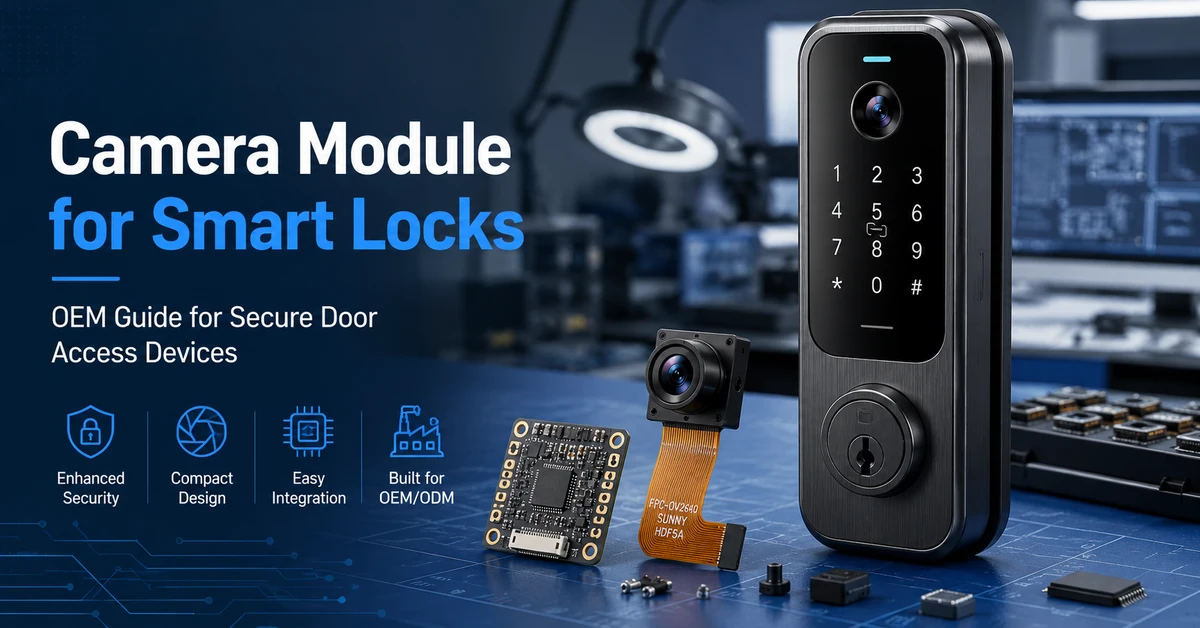
What Is a Camera Module for Smart Locks?
A camera module for smart locks is a compact imaging module installed inside or near the front panel of a smart door lock. It helps the device capture faces, monitor visitors, support video calls, record access events, or work with an app-based smart home system.
A typical smart lock camera module may include:
- CMOS image sensor
- Mini lens and lens holder
- Camera sensor PCBA
- FPC cable or board-to-board connector
- IR filter or low-light filter
- Infrared LED support
- Image signal processing circuit
- Power management circuit
- Main control board interface
- Optional microphone or audio interface
- Optional motion detection or wake-up function
For OEM projects, buyers may need customized camera modules based on lock structure, front panel size, lens angle, resolution, power consumption, interface type, and target market requirements.
Why Smart Lock Camera Modules Need Special Design
Smart locks are different from ordinary indoor cameras. They usually have limited internal space, strict power requirements, frequent wake-up cycles, and outdoor-facing installation conditions.
A camera module used in a smart lock must consider:
- Compact structure
- Low standby current
- Fast wake-up speed
- Stable face capture
- Clear image under backlight
- Low-light or night vision performance
- Door panel installation angle
- Moisture and dust protection
- Secure connection with the main board
- Batch consistency for mass production
This is why buyers should not only compare resolution or price. They should evaluate whether the supplier can support camera PCBA design, SMT assembly, component sourcing, module testing, and OEM customization.
Main Applications of Smart Lock Camera Modules
Camera modules can be used in different types of smart door access products.
| Application | Camera Module Requirement | Typical Buyer |
|---|---|---|
| Facial recognition smart locks | Clear face capture, low-light support, fast wake-up | Smart lock brands |
| Video door locks | Stable video, wide-angle lens, app connectivity | Smart home companies |
| Apartment access systems | Durable module, reliable batch quality | Building access suppliers |
| Smart peephole locks | Compact lens, wide viewing angle, low power | Door lock manufacturers |
| Doorbell lock systems | Video call, motion detection, night vision | Security product brands |
| Hotel smart locks | Stable recognition, controlled quality, long service life | Hospitality hardware suppliers |
| Office access devices | Face capture, visitor record, network compatibility | Commercial access providers |
| IoT security devices | Compact PCBA, cloud/app connection, low power | IoT hardware developers |
HCDPCBA’s Camera Series includes camera-related hardware products, while its PCBA manufacturing category supports customized electronic board production for security and smart device projects.
What Buyers Should Check Before Choosing a Camera Module for Smart Locks
1. Sensor Resolution and Image Quality
The image sensor determines the basic capture quality. For smart locks, the goal is not always the highest resolution. The right choice depends on face recognition accuracy, app viewing quality, storage method, and power consumption.
Buyers should confirm:
- Resolution requirement
- Sensor size
- Frame rate
- Low-light performance
- Dynamic range
- Image noise level
- Face capture distance
- Backlight performance
- Long-term sensor availability
For facial recognition smart locks, stable image quality is more important than marketing-level resolution claims.
2. Lens Angle and Installation Position
Smart locks are installed at different heights and door positions. The camera module must capture visitors clearly without excessive distortion.
Key lens factors include:
- Field of view
- Focus distance
- Lens distortion
- Aperture
- IR compatibility
- Door panel thickness
- Module mounting angle
- Front cover or glass window design
A wide-angle lens may help capture more area, but too much distortion can affect face recognition and image usability.
3. Compact Camera PCBA Design
A smart lock usually has limited internal space because the device also includes a motor, battery, keypad, fingerprint module, wireless module, speaker, microphone, and main control board. The camera PCBA must be compact and easy to integrate.
A good OEM partner should understand:
- Small camera PCBA layout
- FPC or connector placement
- Power circuit stability
- EMI control
- Sensor interface matching
- Testing point design
- Heat control
- Mechanical installation limits
HCDPCBA supports PCB prototyping, SMT assembly, PCBA manufacturing, component sourcing, testing, and OEM/ODM production, making it suitable for buyers who need customized board-level support.
4. Low Power Consumption
Power consumption is one of the most important factors for smart lock camera modules. Most smart locks are battery-powered, so the camera cannot stay active all the time.
Buyers should ask:
- What is the working current?
- What is the standby current?
- Does the camera support wake-up mode?
- How fast does the camera activate?
- Does facial recognition increase power demand?
- How does night vision affect battery life?
- Is the module suitable for long battery operation?
A poorly designed camera module can shorten battery life and increase after-sales complaints.
5. Night Vision and Low-Light Performance
Smart locks often need to identify visitors at night, in apartment corridors, under porch lighting, or in backlit entrance areas. The camera module should support stable low-light performance.
Important points include:
- IR LED compatibility
- IR-cut filter design
- Low-light sensor performance
- Noise control
- Face visibility at night
- Auto exposure control
- Image clarity under mixed lighting
For security products, night performance is not optional. It is a core user requirement.
6. Interface Compatibility
The camera module must communicate reliably with the smart lock main board. Buyers should confirm the required interface before production.
Common interface considerations include:
- MIPI interface
- USB interface
- Parallel interface
- FPC cable length
- Board-to-board connector
- Main board compatibility
- Firmware requirement
- Signal stability
- Driver support
Interface mismatch can cause delays during product development and sample testing.
Camera Module for Smart Locks OEM Specification Checklist
Before requesting a quotation, buyers should prepare a clear specification sheet.
| Item | What to Confirm |
| Application | Facial recognition lock, video lock, peephole lock, doorbell lock |
| Resolution | 720P, 1080P, 2MP, 4MP, or customized |
| Sensor | CMOS sensor type, low-light performance, frame rate |
| Lens | Viewing angle, focus distance, aperture, distortion level |
| Interface | MIPI, USB, parallel, FPC, custom connector |
| PCBA | Board size, connector position, mounting holes |
| Power | Working current, standby current, wake-up mode |
| Night vision | IR support, IR-cut filter, low-light image quality |
| Structure | Front panel fit, door thickness, installation angle |
| Testing | Image test, power test, PCBA inspection, function test |
| OEM needs | Logo, packaging, private label, customized board |
| Quantity | Sample, pilot run, batch production |
| Certification | RoHS, ISO-related quality control, market requirements |
This checklist helps the manufacturer evaluate feasibility, cost, lead time, and production risk more accurately.
OEM vs ODM Camera Modules for Smart Locks
Buyers should choose the right cooperation model based on their product stage.
| Project Type | Meaning | Best For |
| Standard camera module | Use an existing module with limited changes | Fast development |
| OEM smart lock camera module | Customize based on buyer’s lock design and brand needs | Smart lock brands |
| ODM camera module development | Manufacturer supports design and development | Buyers needing a complete solution |
| Camera PCBA manufacturing | Build the electronic board inside the module | Engineering teams |
| Turnkey electronics manufacturing | PCB, SMT, components, testing, and delivery | Buyers needing supply chain control |
If the buyer already has a smart lock design, OEM customization may be the best choice. If the buyer needs help developing the camera electronics and module structure, ODM support may be more suitable.
Common Mistakes Buyers Should Avoid
Choosing the highest resolution without checking power
Higher resolution may increase power consumption, heat, processing demand, and storage requirements.
Ignoring low-light performance
A smart lock camera must work at night and in dim corridors. Daytime samples are not enough.
Not checking mechanical fit
A camera module must match the lock front panel, internal space, connector position, and installation angle.
Overlooking PCBA quality
Poor soldering, weak connectors, or unstable power design can cause camera failure after installation.
Not testing wake-up speed
Smart locks often activate the camera only when someone approaches or presses the doorbell. Slow wake-up affects user experience.
Skipping sample validation
Samples should be tested in the real smart lock housing before batch production.
HCDPCBA’s Support for Smart Lock Camera Module Projects
HCDPCBA can support buyers developing camera modules for smart locks from prototype to production.
PCB prototyping
Prototype production helps buyers verify camera function, PCBA layout, interface compatibility, image quality, and mechanical fit before mass production.
SMT assembly
SMT assembly supports compact camera PCBA production with controlled soldering and component placement.
Component sourcing
Smart lock camera modules involve sensors, lenses, ICs, connectors, FPCs, power components, and optional IR components. HCDPCBA can help buyers manage BOM sourcing and supply stability.
DFMA review
DFMA review helps identify design risks before production, such as weak connector placement, difficult assembly, poor test point access, or unnecessary cost.
Testing support
Testing can include PCBA inspection, power-on testing, image quality testing, low-light testing, interface testing, wake-up testing, and functional verification.
OEM/ODM customization
HCDPCBA can support customized camera electronics, private label requirements, board-level modification, and project-based manufacturing.
Buyers can learn more through HCDPCBA’s About Us page.
Quality Control Points for Smart Lock Camera Modules
A smart lock camera module should be tested for both electronic performance and real-use imaging performance.
| QC Point | Purpose |
| Incoming component inspection | Check sensors, lenses, connectors, FPCs, and PCBs |
| SMT inspection | Verify placement, soldering, and missing components |
| AOI inspection | Detect visible PCBA defects |
| Interface test | Confirm stable signal with the main board |
| Image quality test | Check clarity, color, focus, and noise |
| Low-light test | Verify nighttime or corridor performance |
| Power test | Confirm current, voltage, and heat performance |
| Wake-up test | Check activation speed and stability |
| Functional test | Verify final smart lock camera performance |
| Golden sample approval | Lock production standard before batch production |
A clear testing process helps reduce field failures and improves batch consistency.
How to Choose a Reliable Supplier
A reliable supplier for smart lock camera modules should provide more than a product photo or sample. Buyers should check whether the supplier can support engineering review, PCBA production, component sourcing, and testing.
Important questions include:
- Can the supplier support custom camera PCBA?
- Does it understand smart lock power limits?
- Can it match the right sensor and lens?
- Can it support SMT assembly and testing?
- Can it manage FPC and connector requirements?
- Can it verify low-light performance?
- Can it support prototype and batch production?
- Can it provide OEM/ODM customization?
- Can it communicate technical risks clearly?
For overseas buyers, engineering support and communication quality can reduce development mistakes and improve production stability.
FAQ
1. What is a camera module for smart locks?
A camera module for smart locks is a compact imaging module used in smart door locks for face capture, visitor monitoring, video calls, access records, or app-connected security functions.
2. What camera resolution is suitable for smart locks?
It depends on the application. Many smart locks use 720P, 1080P, 2MP, or customized resolutions. Buyers should balance image quality, power consumption, cost, and processing requirements.
3. Can smart lock camera modules be customized?
Yes. Buyers can customize resolution, lens angle, PCBA size, FPC length, connector type, power design, night vision support, and module structure.
Conclusion
Choosing a camera module for smart locks requires more than selecting a lens and sensor. Buyers need to evaluate image quality, compact PCBA design, low power consumption, night vision, interface compatibility, mechanical fit, testing process, and OEM/ODM support.
For smart lock brands, IoT hardware companies, access control suppliers, and security product distributors, working with an engineering-focused manufacturing partner can reduce development risk and improve product reliability.
HCDPCBA supports smart lock camera module projects through PCB prototyping, SMT assembly, PCBA manufacturing, component sourcing, testing, and OEM/ODM electronics manufacturing. If you are developing a custom camera module or camera PCBA for smart door locks, you can explore HCDPCBA’s Camera Series or PCBA manufacturing services to plan your next OEM project.