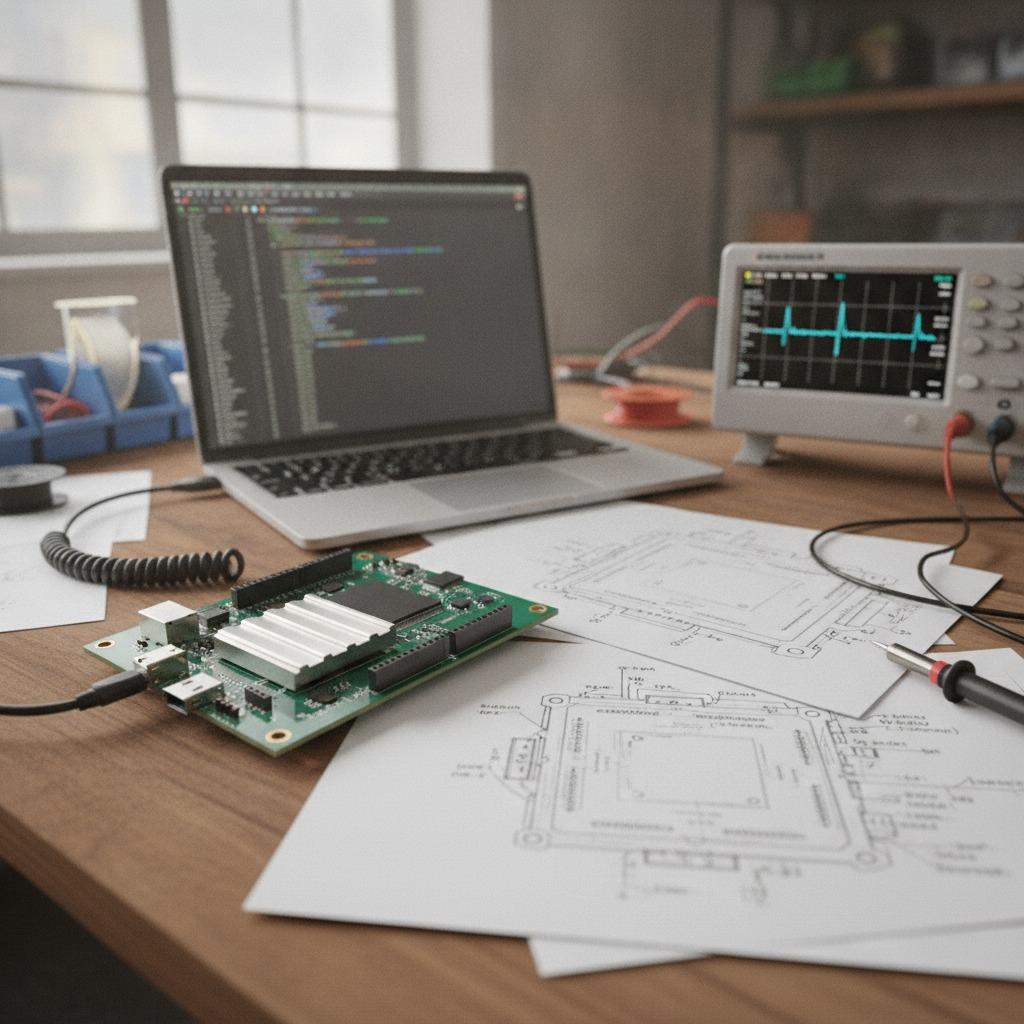
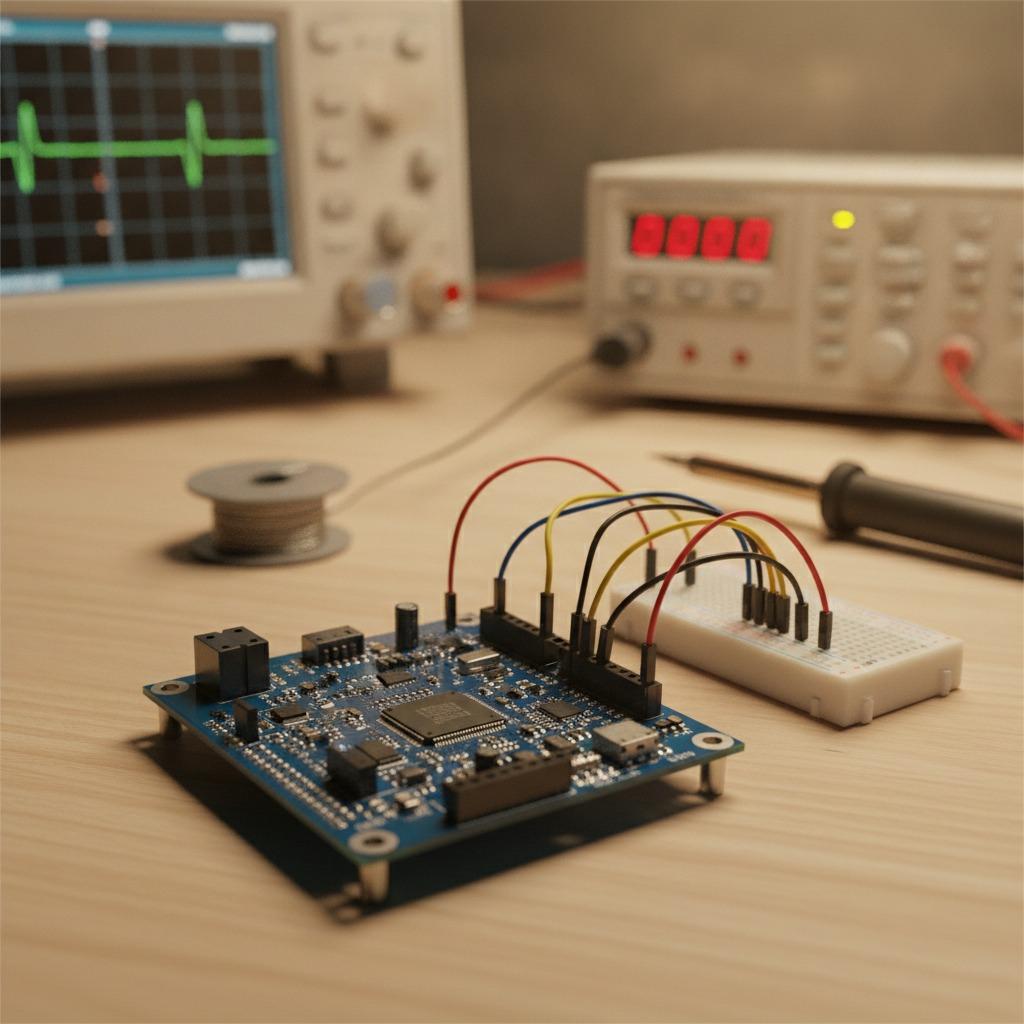
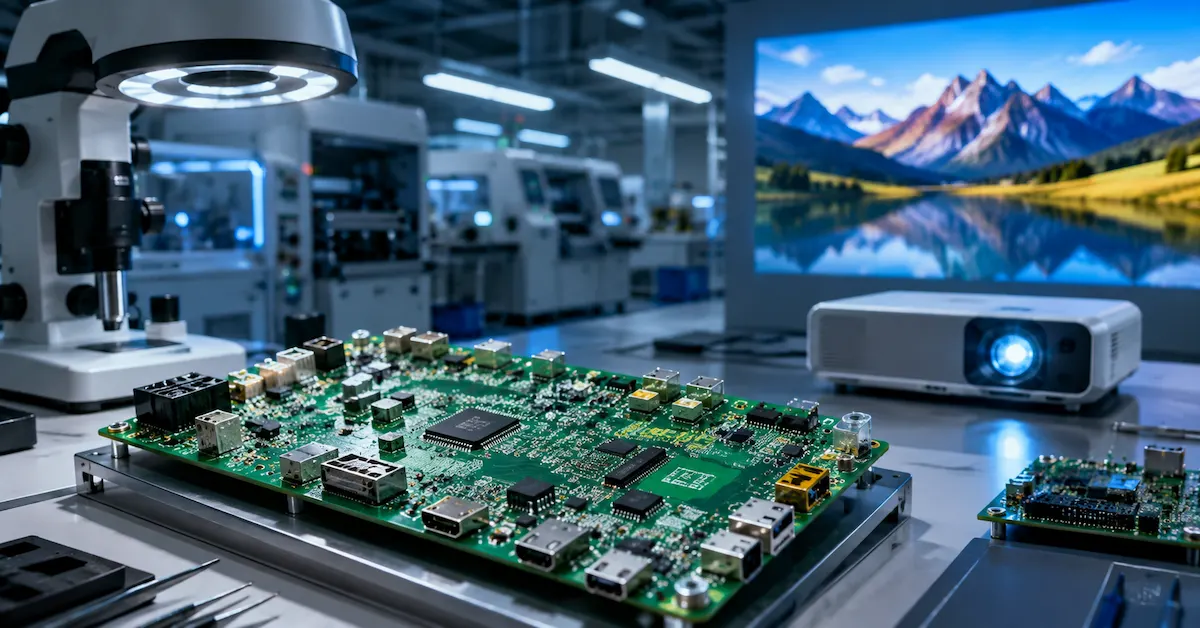
An electronic diy development board is often the first useful bridge between an idea on a workbench and a circuit that actually does something repeatable. For engineers, sourcing managers, and product teams, the real question is not whether a board can blink an LED. It is whether the board is stable enough for debugging, easy enough to integrate, and close enough to production reality that you are not forced to redesign everything later.
Why the right development board matters
In the early stages of product work, a development board can save days of wiring and a fair amount of confusion. It gives you a known microcontroller platform, power handling, USB connectivity, and a cleaner path for testing code, sensors, and peripherals. That sounds basic, but the practical value is in reducing variables. If something fails, you want to know whether the issue is your firmware, your power rail, or the board itself.
For teams building a low-volume prototype or validating a concept before PCBA, the board also matters as a sourcing decision. Cheap boards can look identical on a listing page and still behave very differently on the bench. Inconsistent regulators, noisy USB interfaces, weak soldering, or poor component sourcing can turn a simple demo into a support headache.
Common board types and what they signal
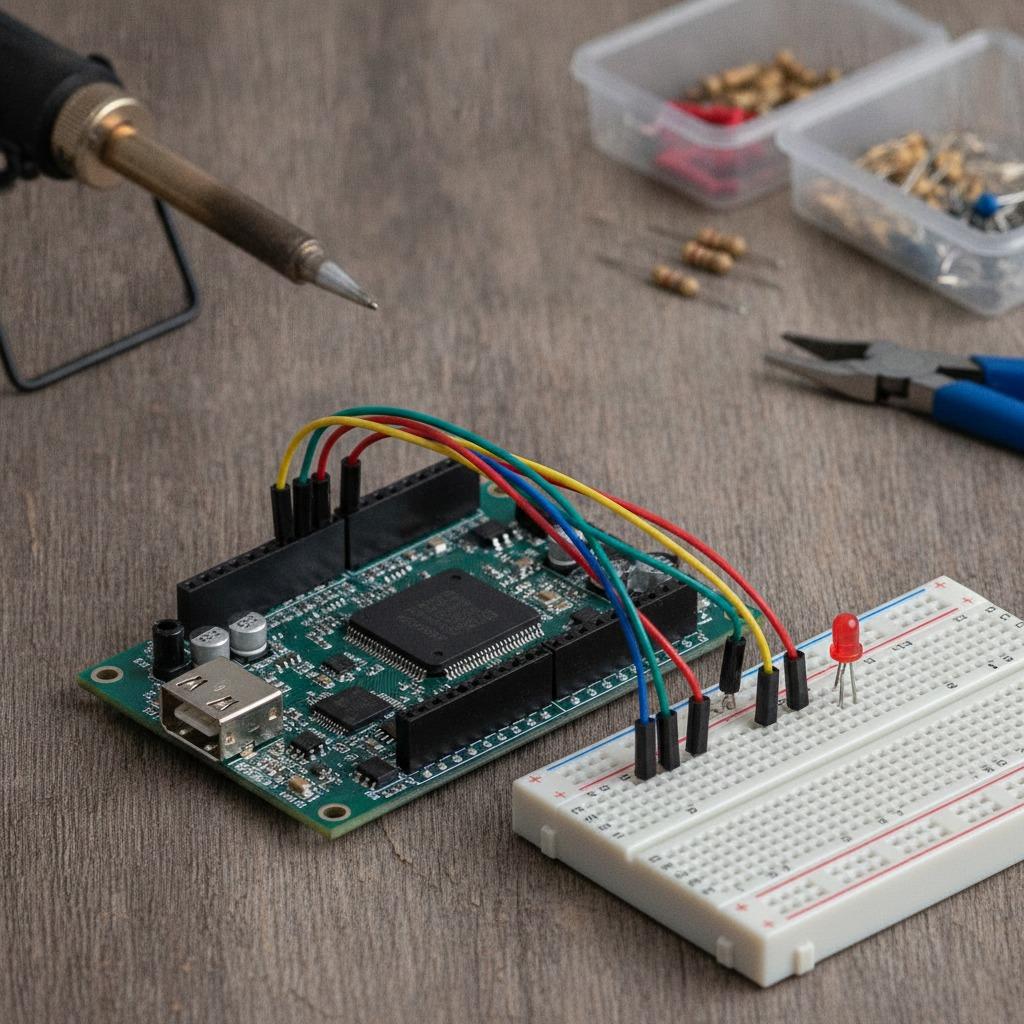
Many buyers compare an atmega2560‑16au development board with other Arduino-compatible options because the ATmega2560 family has long been used for control-heavy projects that need more I/O, more serial options, and enough memory headroom for larger sketches. The appeal is straightforward: plenty of pins, broad community familiarity, and a large ecosystem of shields and examples.
A ch340g usb board is another common search term because the USB-to-serial interface is often the practical difference between a board that is easy to program and one that creates avoidable friction. The CH340G is widely used in low-cost boards, but buyers should still pay attention to the implementation around it. Interface chip choice is only part of the story; layout, soldering quality, and power design matter too.
People also search for a factory price mega2560 board when they are trying to move from one-off purchases to repeatable procurement. At that point, the price tag is not the only concern. Consistency across batches, packaging, traceability, and support for reorders become just as important as unit cost.
Quick comparison: what to check before you buy
For a bench prototype, a low-cost board may be enough if the goal is simply to prove logic or timing. For longer debug cycles, it is worth checking the board against a short list:
• Microcontroller variant and package
• USB interface chip and driver compatibility
• Power input range and regulator quality
• Header alignment and mechanical fit with shields or daughter cards
• Soldering consistency around fine-pitch parts and connectors
• Availability of replacement units from the same source
That last item is often overlooked. A team may build firmware around one board revision and then discover the replacement batch behaves differently. The problem is not dramatic, but it is expensive.
Prototype use versus product thinking
There is a useful dividing line here. A development board is a tool for learning, but a product needs a design path. If your project is heading toward shipment, the board should help answer questions about power budget, I/O mapping, thermal behavior, and testability. It should not become the final architecture by accident.
This is where a manufacturer like hcdpcba becomes relevant. The company’s work in PCB prototyping, SMT assembly, component sourcing, assembly, testing, DFMA, OEM, and ODM services supports the path from concept to production. For a team evaluating an electronic diy development board today and a custom PCBA tomorrow, that continuity matters. It reduces the chance that early decisions will create manufacturing problems later.
hcdpcba also emphasizes rapid response, quality control, and cost optimization, which are all practical concerns when a design is moving from hobby-style iteration to a more disciplined build process. The point is not that every board should be custom from day one. The point is that the prototype stage should not blind you to what mass production will require.
Selection criteria that save time later
1. Match the board to the task
If the project needs many GPIOs, several serial ports, or broader expansion options, an ATmega2560-class board can be a sensible choice. If the design is simple, larger capability is not automatically better. Extra features can make debugging easier, but they can also hide sloppy requirements planning.
2. Inspect the support ecosystem
Documentation, driver availability, example code, and a stable mechanical format are worth more than a glossy product listing. Engineers often underestimate how much time gets lost on tiny incompatibilities.
3. Consider manufacturability early
If the board is a stepping stone to a custom product, ask whether the design can be built and tested efficiently at scale. DFMA review, component substitution planning, and test access points are not glamorous, but they are where budgets are won or lost.
Common mistakes buyers still make
The most common mistake is buying only on headline price. A low factory price mega2560 board can look smart until the team spends extra time troubleshooting boot issues, bad USB enumeration, or inconsistent power behavior. Another mistake is assuming all CH340-based boards are the same. They are not.
It is also easy to confuse a development board with a production-ready platform. A board may be excellent for software bring-up and still be a poor choice for shipping hardware without redesign. That is not a flaw. It is simply the difference between a tool and a finished product.
FAQ
Is an electronic diy development board only for hobbyists?
No. Many engineering teams use them for firmware bring-up, subsystem validation, and early integration work before committing to custom hardware.
Why do buyers focus on the USB chip?
Because USB connectivity affects programming, driver installation, and field debugging. A board that is awkward to connect can slow the whole project down.
When should a team switch from a development board to custom PCBA?
Usually when the design stabilizes, the interface requirements are known, and the team wants to reduce size, cost, or assembly complexity. If that transition is coming soon, planning with a supplier that can handle PCB prototyping, SMT, sourcing, and testing is a sensible move.
A practical next step
If you are evaluating an electronic diy development board for a prototype or short-run build, start with function, then check build quality, then think about repeatability. If the project is likely to evolve into a custom assembly, hcdpcba can support the next stage with PCB prototyping, SMT, component sourcing, assembly, testing, DFMA, and OEM or ODM service. For teams that want fewer surprises between a bench prototype and a manufacturable product, that sequence is usually the safer one.